Devotion — The Architecture of Submission
《奉獻》— 臣服的建築學
sound & performance art · in development · 2026
Do people keep following rules they already know can be broken?
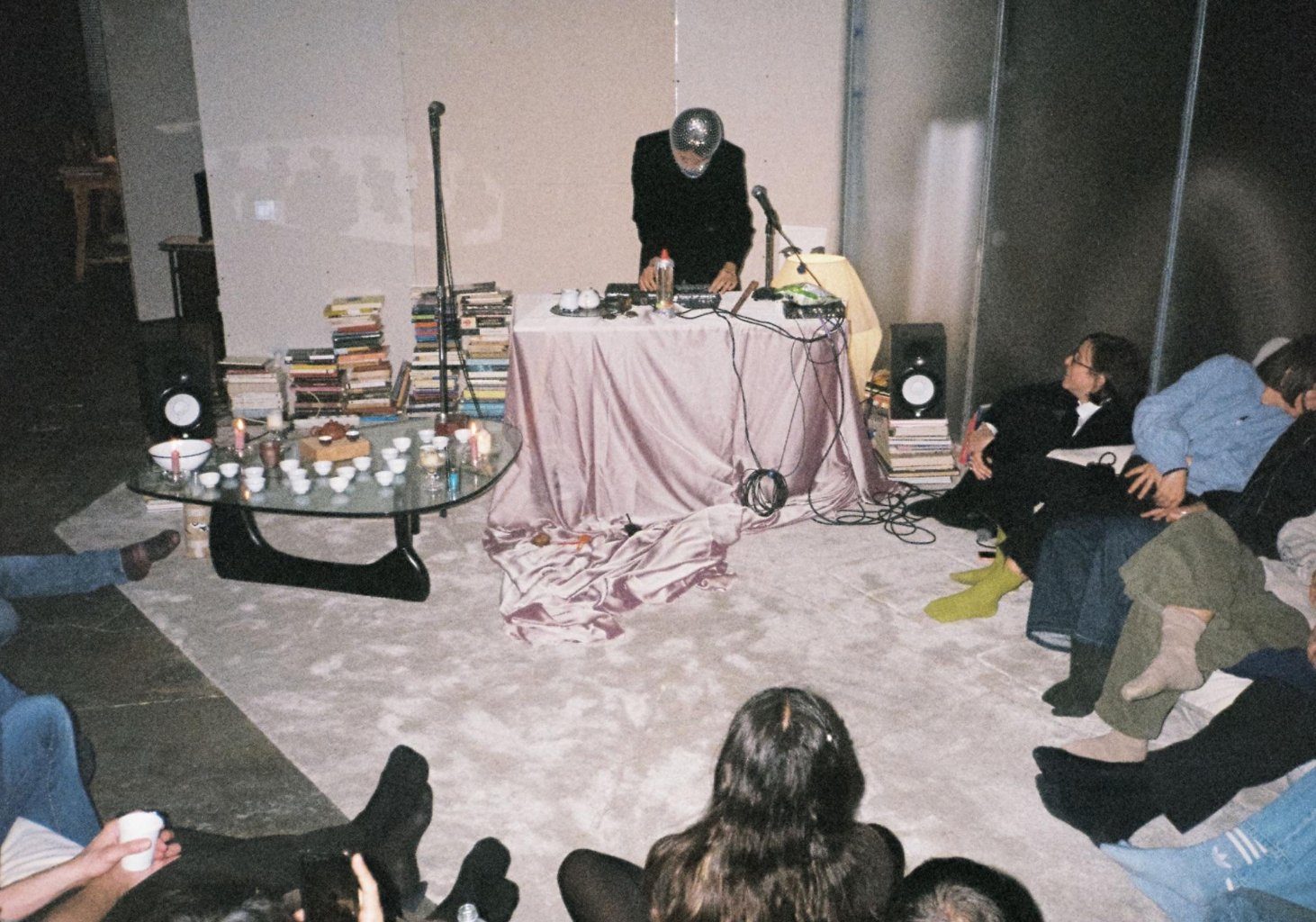
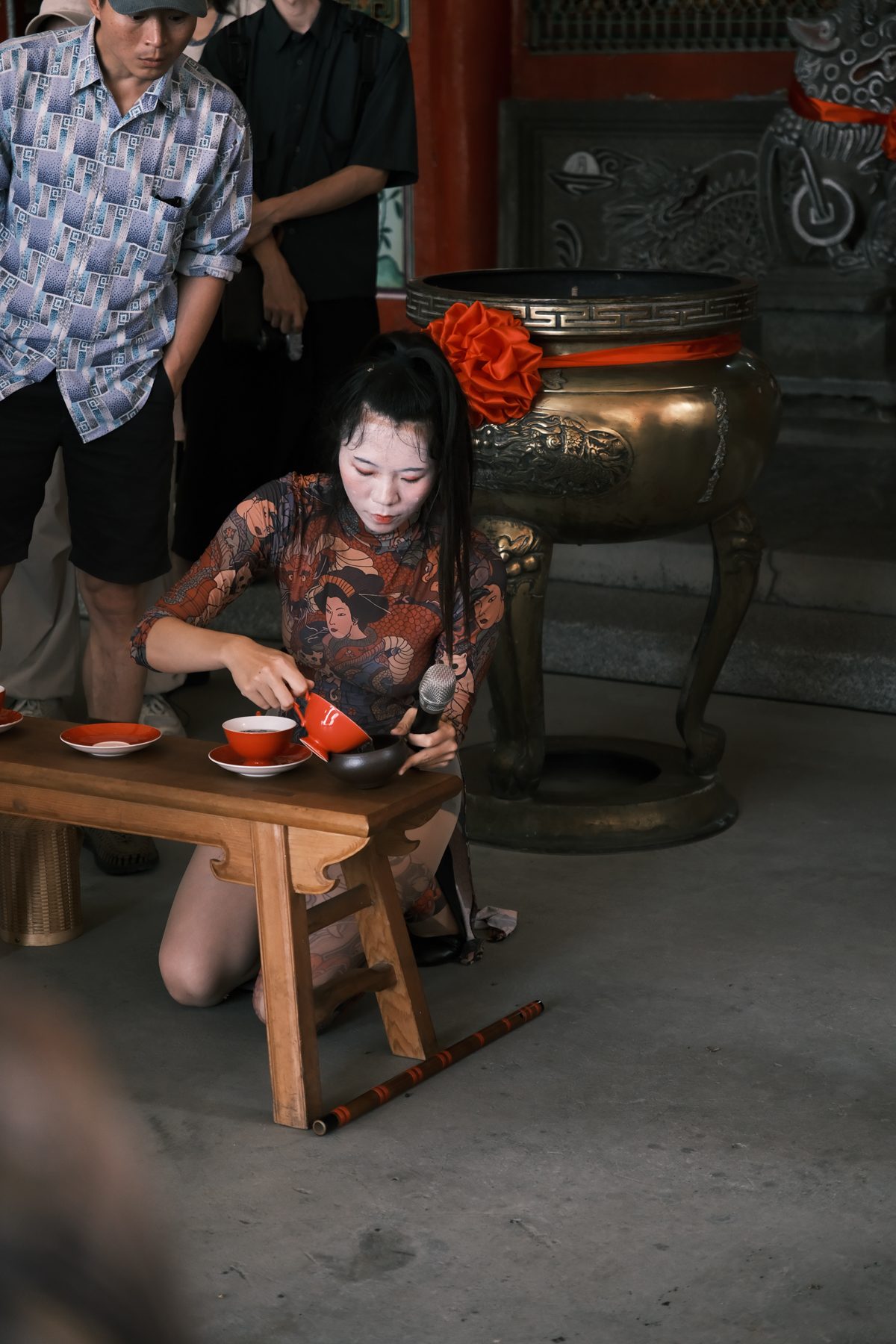
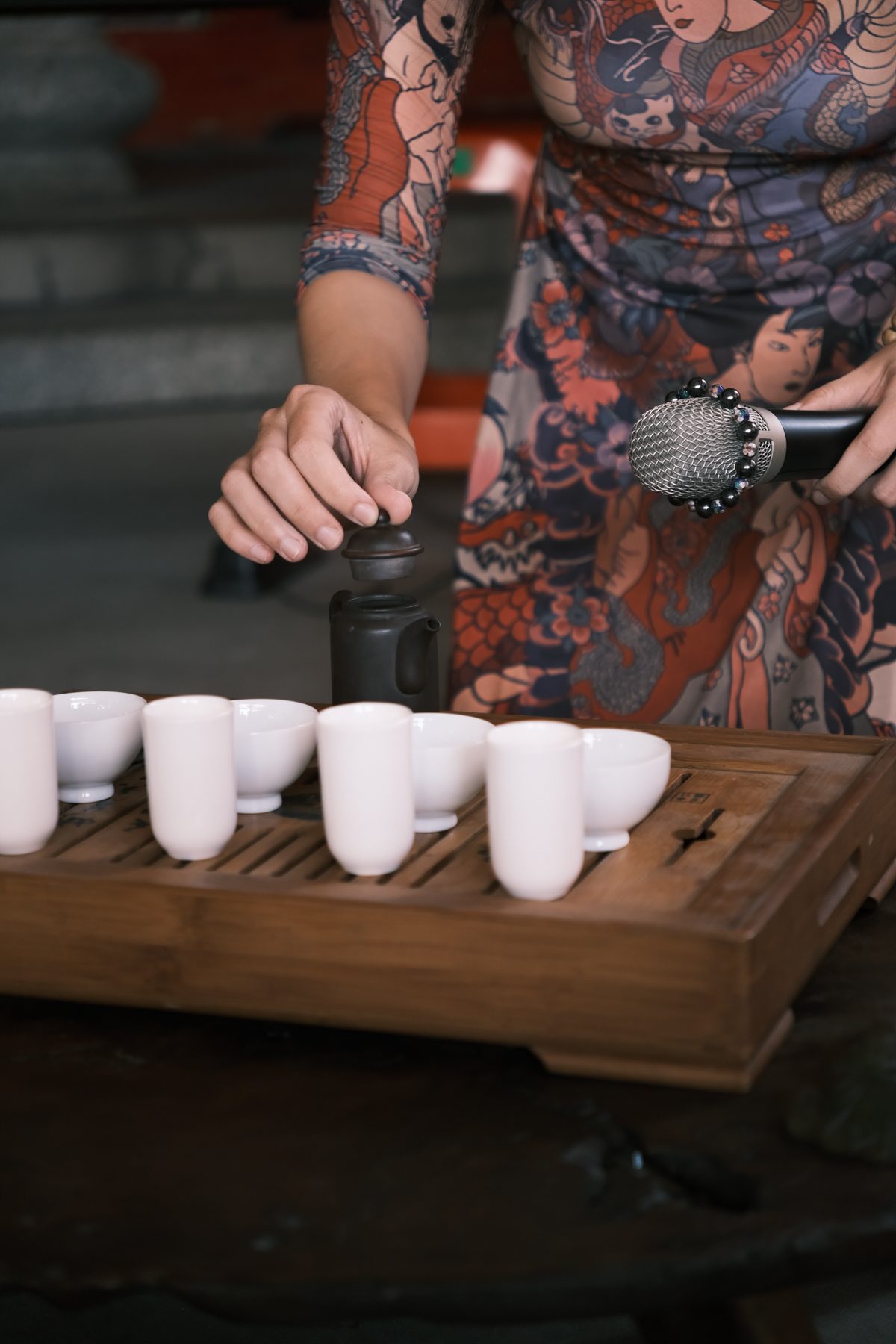
Devotion is a lecture-performance combining tea ceremony, sound, and bodily action — an attempt to rethink how soft power operates. The work does not understand power as command or violence, but as something quieter: how, through ritual, intimacy, and collective tacit agreement, people gradually come to believe certain rules should be followed, and even that they have no standing to change them.
At the centre of the stage is a circle of unstable red bricks. In Asian and Taiwanese culture, red brick carries the weight of inherited order: old buildings, old ethics, paths laid by previous generations. The bricks are tilted, fragile, unevenly placed — and yet people still choose to walk on them.
The performance opens with the sounds of the tea practitioner brewing tea and with vocal lines drawn from rural ceremonies of welcoming ancestors and deities — pulling the room into a time governed by ritual. The practitioner then enters the brick circle carrying a tray of teaware and walks the first circle along the unstable path, acknowledging the fragile, weathered bricks as a presence in their own right.
The purpose of this first circle is to establish the authority of tradition. The audience needs no instruction; they instinctively accept the rules of the path. The fragile bricks become, by tacit agreement, an order that cannot be crossed.
In the second circle, a second performer enters from the opposite direction. The two approach one another on the narrow path, meet, and stand still. Who should yield? Does the audience want the practitioner to complete the ritual? The performers begin to look to the audience for help.
The audience gradually realises: the bricks can be moved. Will they help?
What the work is really interested in is what happens after this realisation. A planted audience member moves the first brick — but this intervention is itself part of the piece. Does a group need someone to go first before it dares believe it has the power to change anything? Once the first person acts, will others follow? Will the audience side with the practitioner still keeping the ritual, or with the one moving against it?
Devotion does not try to offer answers about human nature. It is closer to a live experiment in collective psychology: when people are allowed to intervene, do they actually believe they can change the structure? And is our trust in order already so deep that even when we see the path collapsing, we still choose to keep it standing?
中文簡介 / Read in Chinese
人們真的會繼續遵守那些自己已經知道可以被打破的規則嗎?
《奉獻》是一場結合茶席、聲音與身體行動的講座式行為演出,試圖重新討論軟實力如何運作。作品並不將權力理解為命令或暴力,而是理解為一種更安靜的東西:人們如何在儀式、親密感與集體默契之中,逐漸相信某些規則應該被遵循,甚至相信自己沒有資格改變它。
舞台中央是一圈不穩定的紅磚路徑。紅磚在亞洲與台灣的文化裡,象徵一種被延續的舊秩序:老建築、舊倫理、守成的道路。它們已經傾斜、脆弱、不平均,但人仍選擇在上面行走。
演出以茶藝師泡茶的聲響、以及農村迎神的吟唱開場——將現場帶入一種被儀式統治的時間。隨後,茶藝師端著茶盤進入紅磚圈,在紅磚路上走完第一圈,確認脆弱、老舊紅磚的主體性。
這一圈的目的,是建立傳統的權威感。觀眾無需被告知,便會本能地接受這條路徑的規則——脆弱的磚塊由此被默認為一種不可違逆的秩序。
第二圈開始時,另一位表演者從反方向走入紅磚圈。兩人在狹窄路徑上逼近、相遇、僵持。誰該讓路?觀眾是否支持茶藝師完成儀式?表演者開始以眼神向觀眾求助。
觀眾會逐漸發現:紅磚其實是可以被搬動的。他們會幫忙嗎?
作品真正關心的,是這個發現之後的事。演出中將安排一位暗樁觀眾率先移動磚塊——但這個示範本身也是作品的一部分。群體是否需要有人先示範,才敢開始相信自己擁有改變的權力?當第一個人動手後,其他人會跟隨嗎?人們會選擇幫助那位仍在遵守儀式的茶藝師,還是支持逆向而行、破壞規則的人?
《奉獻》不試圖給出關於人性的答案。它更像是一場關於集體心理的現場實驗:當人們被允許介入時,他們是否真的相信自己能改變結構?我們對秩序的信任,是否早已深到即使看見道路崩塌,仍然選擇繼續維持它?